Introduction
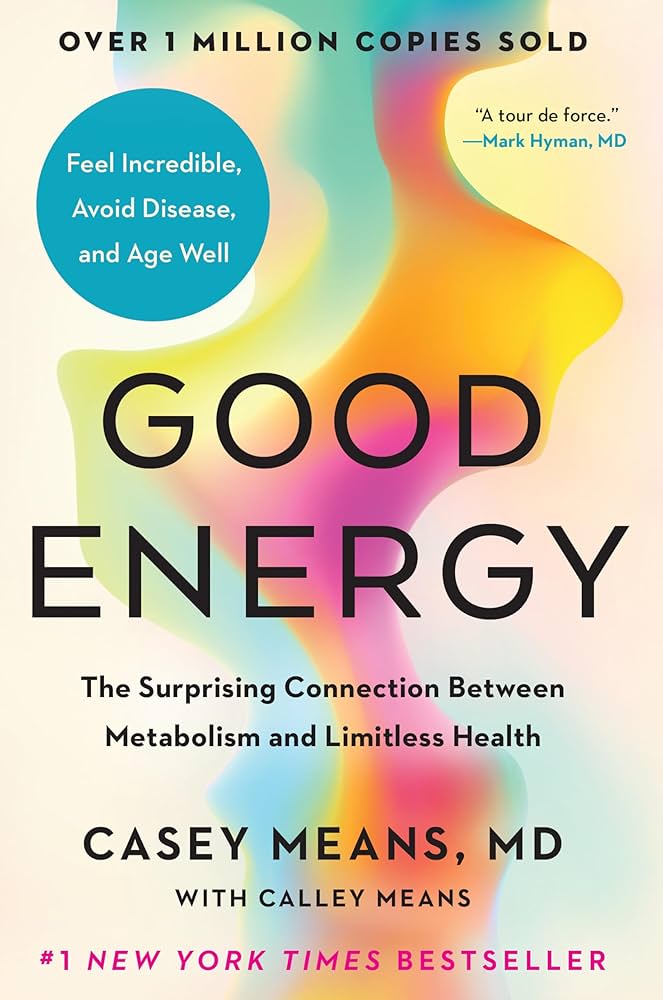
Good Energy begins with a manifesto about the causes of poor health in the modern world, and the flaws in how we approach healthcare in the American medical system, wrapped in a touching story about the authors’ mother’s health problems. It argues that we don’t recognize the root cause of ill health until it’s causing disease, then we treat the disease rather than the root cause. The book then offers a suite of diet and lifestyle advice intended to solve the problem.
We decided to review this book because it’s particularly important at this time in US history. The book’s main author, Casey Means, MD, is the current nominee for US surgeon general, the nation’s chief public health spokesperson. The book’s second author, Calley Means, is a health entrepreneur and social media firebrand who is an advisor of Robert F. Kennedy, secretary of the US Department of Health and Human Services. As such, they hold considerable influence over government public health policy. Both authors are part of the “Make America Healthy Again” movement led by Kennedy, which is often at odds with the public health and medical communities.
Scientific Accuracy
We reviewed three representative claims in Good Energy:
- Poor metabolic health is the cause of cardiovascular disease.
- Poor metabolic health is the cause of depression.
- Eating added sugar contributes to poor metabolic health.
We chose the first claim because the book argues that “bad energy” (poor metabolic health) causes cardiovascular disease, and cardiovascular disease is the leading cause of death in the US and globally. We chose the second claim because we wanted to evaluate the book’s claims about mental health, and depression is a common and highly researched mental health condition. We chose the third claim because refined added sugar is the first item listed under “bad energy foods” on page 170, and the same page argues that it may be the “worst offender” that leads to “bad energy”.
It wasn’t always clear to us how the book defines “good/bad energy”. On page xii, it says “Good Energy is also known as metabolic health”. That’s the definition we use in this review, because it’s the most explicit definition we found in the book. At times it seemed like the book was implying that “good energy” means mitochondrial function. Mitochondrial function isn’t quite the same as metabolic health, and although differences in mitochondrial function are correlated with many common diseases, the evidence that it causes them isn’t very strong in most cases.
What is metabolic health? It typically refers to how the body distributes and uses energy sources. A person who is in good metabolic health has healthy levels of sugar (glucose) and fat (triglycerides) in the blood without requiring medication, and high sensitivity to the energy-regulating hormone insulin. A person who is not in good metabolic health has high levels of sugar and/or fat in the blood, may have the metabolic syndrome, type 2 diabetes or prediabetes, and has low insulin sensitivity.
Good Energy received an average scientific accuracy score of 3 out of 4 (75%), which means it’s moderately well supported by evidence overall.
The first claim, that poor metabolic health is the cause of cardiovascular disease, received a score of 3 out of 4. That means it’s moderately well supported by current evidence. Metabolic health is a major factor in cardiovascular disease risk, which is why people who have the metabolic syndrome (poor metabolic health) have 2.4 times higher risk of cardiovascular events than people in better metabolic health. That said, the risk that comes from some cardiovascular risk factors like LDL-cholesterol and Lp(a) is partially or entirely independent of metabolic health, so “bad energy” can’t explain everything.
The second claim, that poor metabolic health is the cause of depression, received a score of 2 out of 4. That means it’s weakly supported by current evidence. Obesity and the metabolic syndrome (a cluster of features indicating poor metabolic health) are associated with a higher risk of depression, but causality probably goes in both directions. In other words, obesity contributes to depression but depression also contributes to obesity. Also, these associations are dwarfed by the effects of other factors not mentioned in Good Energy, like stressful life events and genetics.
The third claim, that eating added sugar contributes to poor metabolic health, received a score of 4 out of 4. That means it’s strongly supported by current evidence. Added sugar tends to worsen metabolic health, and studies suggest this is mostly because it encourages us to eat/drink more calories than we need. We think Good Energy overstates the case against sugar, but it does clearly acknowledge that other factors in the diet and lifestyle are also important, so we didn’t lower its score for that.
Good Energy had many chances to say that the causes of disease are often complex and not fully understood, and metabolic health is important but not the only cause of disease, low energy, and low mood. But it generally glossed over this complexity and uncertainty, and confidently stuck to the story that nearly all physical and mental health problems are caused by poor metabolic health. This simplistic theory of health is why it fell short of a higher scientific accuracy score.
Expand the scientific accuracy scoring section below for more detailed discussion, supporting quotes, and citations.
Claim 1
“Bad energy” (poor metabolic health) is the cause of cardiovascular disease.
Supporting quote(s) and page number(s)
Page xi: “Depression, anxiety, acne, infertility, insomnia, heart disease, erectile dysfunction, type 2 diabetes, Alzheimer’s disease, cancer, and most other conditions that torture and shorten our lives are actually rooted in the same thing. [Bad Energy]”
Page 27: “Bad Energy Is the Root of Disease” (title of the chapter that discusses cardiovascular disease)
Page 48: “The common conditions include high blood pressure, high cholesterol, heart disease, stroke, burgeoning dementia, arthritis, cancer, or upper respiratory conditions that have required hospitalization… These are all conditions rooted in Bad Energy.”
Page 50: “Heart disease – across the spectrum of high blood pressure, high cholesterol, and coronary artery disease – is directly rooted in Bad Energy.”
Criterion 1.1. How well is the claim supported by current evidence?
3 out of 4
This claim received a score of 3 out of 4, meaning it’s moderately well supported by current evidence. Metabolic health is a major factor in cardiovascular disease risk, but it’s not the only thing that matters.
This claim can be approached from several angles. The first is to see how strongly poor metabolic health associates with cardiovascular disease risk. The metabolic syndrome is a cluster of unfavorable health markers that are a reasonable definition of poor metabolic health. A common definition includes at least 3 of the following 5 factors: high waist circumference (men >102 cm; women >88 cm); high triglycerides (≥150 mg/dl); low high-density lipoprotein (HDL) cholesterol (men <40 mg/dl; women <50 mg/dl); high blood pressure (≥130/≥85 mm Hg); and high fasting glucose (≥110 mg/dl). A large meta-analysis (study of studies) published in 2010 reports that people with the metabolic syndrome have 2.4 times higher risk of developing cardiovascular disease and dying of it vs. people without it.
Type 2 diabetes is another form of poor metabolic health. Similar to the metabolic syndrome, a large meta-analysis published in 2010 reports that people with type 2 diabetes have roughly twice the cardiovascular risk of people without diabetes.
Both papers interpret the association as meaning that the metabolic syndrome or diabetes increase the risk of cardiovascular disease (e.g., “Diabetes confers about a two-fold excess risk for a wide range of vascular diseases”). We think this conclusion is logical because poor metabolic health shifts several cardiovascular risk factors in the wrong direction, including blood pressure.
While we agree with Good Energy that poor metabolic health increases the risk of cardiovascular disease, and good metabolic health is protective, it isn’t the only factor. For example, genetic factors that impact blood lipids can have a major impact on cardiovascular risk. Lp(a) is a type of blood lipid (technically, a lipoprotein) whose blood level is largely genetically determined and has a major impact on cardiovascular risk.
LDL-cholesterol level is another major cardiovascular risk factor that’s partially genetically determined, although it’s more responsive to diet and lifestyle than Lp(a) is. LDL isn’t just a marker of risk – it’s a key causal driver of risk. Aside from genetics, it can also be impacted by diet. For example, eating saturated fat from foods like red meat and butter leads to higher LDL-cholesterol than the same amount of polyunsaturated fat from nuts, fish, and vegetable/seed oils. Being metabolically healthy appears to greatly lower the risk of having a heart attack or stroke, but there’s no convincing evidence that it fully eliminates the risk from high LDL, and we think it’s unlikely that it does.
Good Energy includes some partially incorrect information de-emphasizing the role of LDL-cholesterol in cardiovascular disease on pages 96-99, much of it drawn from Robert Lustig, MD and Mark Hyman, MD. For example:
- It quotes Dr. Lustig as saying: “the medical community places way too much significance on [LDL-cholesterol], and they do that because we have a drug for it.” We think the emphasis placed on LDL-cholesterol is appropriate given the important role it plays in causing cardiovascular disease, and having safe and effective drugs for it that reduce the risk of having a heart attack by about 10-40% certainly adds to the case. We note that LDL-cholesterol isn’t the only drug target in cardiovascular medicine: blood pressure, blood clotting, and metabolic health (GLP-1 drugs) are all evidence-based drug targets that reduce risk in specific contexts.
- Dr. Lustig states that statins and low-fat diets only reduce large LDL particles, which are harmless. However, if that were true, statin drugs would be ineffective, and they aren’t.
Presumably because of these arguments, Good Energy doesn’t emphasize keeping LDL-cholesterol in an optimal range (or the related ApoB). LDL-cholesterol and ApoB aren’t included in the “recommended ranges” summary on p. 111-3, or the list of five key health metrics on p. 268. Since LDL-cholesterol is a major determinant of cardiovascular risk, and it’s easily treatable via diet and/or drugs, we think the book leaves significant value on the table by de-emphasizing it.
Overall (average) score for claim 1
3 out of 4
Claim 2
“Bad energy” (poor metabolic health) is the cause of depression.
Supporting quote(s) and page number(s)
Page xi: “Depression, anxiety, acne, infertility, insomnia, heart disease, erectile dysfunction, type 2 diabetes, Alzheimer’s disease, cancer, and most other conditions that torture and shorten our lives are actually rooted in the same thing. [Bad Energy]”
Page 27: “Bad Energy Is the Root of Disease” (title of the chapter that discusses depression)
Pages 34-36 discuss the ways in which “Bad Energy” causes depression. Other potential causes, like genetics, psychological factors, and hard life events, aren’t mentioned.
Criterion 1.1. How well is the claim supported by current evidence?
2 out of 4
This claim received a score of 2 out of 4, meaning that it’s weakly supported by current evidence. Metabolic health probably does affect the risk of depression, but it’s probably less important than other factors like genetics, psychological factors, and hard life events (on average). It’s also important to note that the causes of depression aren’t fully understood.
Good Energy cites very limited evidence to support its position, and none of it supports the position that poor metabolic health is the sole cause, or even the main cause of depression.
- Bansal and Kuhad 2016 is a review paper that discusses links between mitochondrial function and depression. However, the arguments are mechanism-based and present no convincing evidence that mitochondrial dysfunction is a major cause of depression in humans.
- Lee and Giuliani 2019 is a review paper that describes associations between inflammatory markers and depression risk. Most of the evidence is correlational, meaning it’s hard to know whether inflammation causes depression, depression causes inflammation, or neither. Some of the evidence it cites does tend to support a causal relationship, like this small study reporting that people treated with interferon alpha (part of the body’s response to viruses) developed a variety of psychiatric symptoms including depression. However, the review paper doesn’t argue that inflammation is the sole, or even main cause of depression. It acknowledges that “many factors play a role in the development of depression”.
- Watson et al. 2021 is an observational study that reports that a higher triglyceride-HDL ratio (an indicator of poorer metabolic health) is associated with a 89% higher risk of developing depression over the follow-up period. However, the study reports high uncertainty about the size of the effect: it could have been as small as +15% or as large as +211%. It also reports an association between high fasting blood sugar and depression risk, again with high uncertainty about the size of the effect. While this study reports associations between measures of metabolic health and depression risk, it’s not clear what is causing what.
Association studies report that having the metabolic syndrome (a cluster of features indicating poor metabolic health) is associated with a ~42% higher risk of depression. The authors argue that the association is bidirectional, meaning it’s partially explained by poor metabolic health causing depression, and partially explained by depression causing poor metabolic health. Similar bidirectional findings have been reported for obesity.
Genetic studies support the idea that obesity increases the risk of depression, and effects on metabolic health are one possible explanation for the link. However, the size of the effect is modest. Genetic risk of type 2 diabetes is also associated with a small increase in the risk of depression.
In contrast, hard life circumstances like childhood trauma and stressful life events increase the risk of depression by a large amount (2.5 to 10 fold). Genetics also play a major role in who develops depression and who doesn’t.
Anti-inflammatory drug trials that report on depression symptoms are another place to look. A meta-analysis (study of studies) of 14 such trials reports that anti-inflammatory drugs do reduce the risk of depression, with a fairly small effect size (SMD 0.34). However, the authors note that the studies were at high risk of bias, so we interpret that with caution.
For a bird’s-eye view of the biological mechanisms that cause depression, we can turn to genome-wide association studies (GWAS). These look for genetic differences throughout the genome that are associated with a particular trait, in this case, depression. They can tell us whether depression-linked genes tend to show up in pathways related to metabolism vs. other things. GWAS report that depression-related genes are overwhelmingly related to brain function, not to metabolism. This tells us that poor metabolic health probably isn’t the main driver of depression.
Overall, we think metabolic health probably does affect the risk of depression, but we haven’t seen evidence that it’s the sole, or even the main cause of depression.
Overall (average) score for claim 2
2 out of 4
Claim 3
Eating added sugar contributes to “bad energy” (poor metabolic health).
Supporting quote(s) and page number(s)
Page 170: “Of all the levers most damaging our cells and preventing Good Energy, I believe the worst offender may be added sugar.”
Page 170: “Refined added sugar causes astronomically more deaths and disability per year than COVID-19 and fentanyl overdoses combined.”
Criterion 1.1. How well is the claim supported by current evidence?
4 out of 4
This claim received a score of 4 out of 4, meaning that it’s strongly supported by current evidence. Added sugar tends to worsen metabolic health, mostly because it encourages us to eat/drink more calories than we need. While we think the book overstates the case against sugar, it does clearly acknowledge that other factors in the diet and lifestyle are also important, so we didn’t lower its score for that.
Te Morenga et al. 2013 is a wide-ranging meta-analysis (study of studies) of studies on the impact of sugar intake on body weight. It gives us a good overall sense of what research on dietary sugar and body weight has found. In trials where sugar is added to the diet without trying to keep calorie intake constant, people tend to gain weight (about 2 lbs or 0.80 kg). In trials where sugar is subtracted from the diet without trying to keep calorie intake constant, people tend to lose weight (about 2 lbs or 0.75 kg). In trials where sugar is exchanged for an equal number of calories of other carbohydrate, people don’t gain or lose weight. This suggests that it’s the impact of sugar on calorie intake that’s important for weight gain.
Choo et al. 2018 is a meta-analysis of controlled trials that’s squarely focused on the metabolic effects of added sugar intake (such as HbA1c and fasting insulin). It reports that increasing added sugar intake can worsen metabolic health, again mainly via its ability to increase calorie intake. It notes that these harmful effects were strongest with sugar-sweetened beverages like soda, and weren’t seen for fruit.
While added sugar does tend to worsen metabolic health and promote weight gain, the effects are mostly seen with sugar-sweetened beverages, and less so with solid sugars. Good Energy singles out sugar-sweetened beverages as a high-priority item to eliminate on page 171 – a choice we agree with.
As for Good Energy’s claim that “refined added sugar causes astronomically more deaths and disability per year than COVID-19 and fentanyl overdoses combined” (p. 170), we think it’s overstated. The book doesn’t provide a citation to support it. To evaluate it, we looked up some statistics:
- US Centers for Disease Control (CDC) statistics on drug overdose deaths. In 2023, the CDC reported 22 deaths per 100,000 people from overdosing on “synthetic opioids other than methadones”, which is mostly fentanyl.
- US CDC statistics on COVID-19 deaths. In 2023, the CDC reported 76,054 deaths that involved COVID-19 as a contributing factor. The page states that “in at least 66% of these deaths, COVID-19 was listed as the underlying cause of death”. 76,054 times 66% = 50,196. Dividing that by the US population in 2023 yields a death rate of 15 deaths per 100,000 people.
- Lara-Castor et al. 2025 estimates of the number of deaths caused by sugar-sweetened beverages in the US in 2020 at 11 deaths per 100,000 people (supplementary data 1, p. 39-40). Although this doesn’t include the health impacts of solid sugars, sugar-sweetened beverages seem to be the most harmful type of sugar. We also note that deaths caused by sugar-sweetened beverages are harder to estimate than drug overdose and COVID-19 deaths because the impacts are more indirect and long-term. This means the estimate is more uncertain.
The estimate for sugar is quite uncertain, but these figures are still hard to square with the book’s claim that “refined added sugar causes astronomically more deaths and disability per year than COVID-19 and fentanyl overdoses combined”.
We decided not to lower the book’s score for this, because it clearly acknowledges that other aspects of diet and lifestyle are also important.
Overall (average) score for claim 3
4 out of 4
Overall (average) score for scientific accuracy
3 out of 4
Reference Accuracy
Good Energy received a reference accuracy score of 3.1 out of 4 (78%),* meaning its references support its claims moderately well on average.
In most cases, the book accurately represents the references it cites, and the references strongly support the passage in the book. In cases where a reference got a lower score, it was either because the book represented the reference inaccurately, or the book represented the reference accurately but the reference itself wasn’t convincing.
One example of the former is that Good Energy cites a paper to support this statement: “compared to one hundred years ago, we are consuming astronomically more sugar…” (p. xiv). However, the paper itself reports that added sugar intake in the US today is similar to one hundred years ago (figure 10).
In some sections, the book relies heavily on information from Mark Hyman, MD, and Robert Lustig, MD. Dr. Hyman’s books The Pegan Diet and Eat Fat Get Thin didn’t fare very well in our scoring, with overall scores of 59% and 48%. Dr. Lustig’s book Metabolical also didn’t fare very well, earning an overall score of 55%. Despite partially relying on information from these authors, Good Energy has significantly higher reference accuracy.
The references for Good Energy aren’t found in the book itself. Instead, they’re found in a file on Dr. Means’s website. We prefer references in the book itself because that makes it easier to fact-check the book’s claims and access can never be withdrawn, but we were able to access the references without any difficulty so we didn’t lower the book’s score for it.
*We used a true random number generator to choose a chapter, then a reference from that chapter. We repeated that ten times, and evaluated how well each reference supports the associated claim in the book.
Reference 1
Reference
The Good Energy Plan, reference 2. “What Is a Standard Drink?” National Institute on Alcohol Abuse and Alcoholism.
Associated quote(s) and page number(s)
Page 276: “A standard serving of alcohol in the United States is defined as 14 grams of alcohol…”
Criterion 2.1. Does the reference support the claim?
4 out of 4
This reference received a score of 4 out of 4, meaning that it strongly supports the claim.
The reference is to a page on the US National Institute on Alcohol Abuse and Alcoholism website. It says “In the United States, one standard drink contains about 14 grams, or about 0.6 fluid ounces, of pure alcohol.” This straightforwardly supports the associated statement in the book.
Reference 2
Reference
Chapter 2, reference 17. Diamanti-Kandarakis and Dunaif. Endocrine Reviews 33:981. 2012.
Associated quote(s) and page number(s)
Page 41: “The prevalence of obesity in women with PCOS in the nation is 80 percent.”
Criterion 2.1. Does the reference support the claim?
3 out of 4
This reference received a score of 3 out of 4, meaning that it supports the claim moderately well. The reference is a review paper in a respected scientific journal, and it contains the quote: “Indeed, in the United States, the prevalence of obesity (BMI ≥ 30 kg/m2) in women with PCOS is approximately 80%.” The paper is cited accurately in Good Energy.
Unfortunately, the quote in the review paper itself doesn’t appear to be very well supported, according to the three studies it cites.
- Knochenhauer et al. 1998 reports that 36% of the women with PCOS they identified had obesity (4 of 11).
- Legro et al. 1999 reports that 73% of women with PCOS in their study had “obesity”, but they use a non-standard BMI cutoff of 27 kg/m2 to define that. Table 2 suggests that 65% had obesity using the standard 30 kg/m2 cutoff.
- Ehrmann et al. 1999 doesn’t report the prevalence of obesity in women with PCOS in their study, but average BMI was in the obese range for all three subgroups they studied.
Because the paper was cited accurately but the claim in the paper isn’t well supported, we give this claim a 3 out of 4.
Reference 3
Reference
Introduction, reference 5. “Chronic Diseases in America.” Centers for Disease Control and Prevention, December 13, 2022
Associated quote(s) and page number(s)
Page x: “Six out of ten adults are living with a chronic illness.”
Criterion 2.1. Does the reference support the claim?
4 out of 4
This reference received a score of 4 out of 4, meaning that it strongly supports the claim. The link provided in the book is to an infographic made by the US Centers for Disease Control titled “Chronic Diseases in America”. It says “6 in 10 adults in the US have a chronic disease”.
Although the original CDC page is down, Archive.org has a copy of it.
Reference 4
Reference
Chapter 8, reference 8. Backman, Maurie. “Will You Waste $1,860 This Year on 1 Common but Unnecessary Expense?” The Motley Fool, January 8, 2020.
Associated quote(s) and page number(s)
Page 212: “People in the United States have a desire to be fit, with sixty-four million belonging to fitness centers and spending nearly $2,000 on average on health and fitness per person annually.”
Criterion 2.1. Does the reference support the claim?
2 out of 4
This reference received a score of 2 out of 4, meaning that it weakly supports the claim. It’s a link to a Motley Fool article (now hosted here) that states: “The average American spends $1,860 annually on health and fitness, including gym memberships, reports GOBankingRates.”
The article is accurately cited by Good Energy, but the figure is almost certainly a major overestimate of the amount the average American spends per year on health and fitness (excluding healthcare costs, which weren’t the subject of the passage).
- Industry data report that in 2023, the average gym membership cost $65/mo in the US, which equals $780 per year. The same source reports that 73 million Americans had a gym membership in 2023 (1 in 3.4). That works out to an average of $231 per year, per adult for gym memberships in the US.
- Dietary supplements are another key health and fitness expense. In 2020, Americans spent about $50 billion on dietary supplements. That works out to about $194 per year, per adult on average.
- We’re up to $425 per year per adult – less than ¼ of the $1,860 claimed in the Motley Fool article. While there are probably other “health and fitness” expenses this calculation missed, we don’t think they add up to $1,400 per year.
We think the most likely explanation is that the Motley Fool article is inaccurate. As the source for the $1,860 figure, it cites a GOBankingRates article that doesn’t inspire confidence. The GOBankingRates article doesn’t say exactly how it got that number, but the text at the bottom implies that they compiled it from a variety of other websites.
Reference 5
Reference
Chapter 9, reference 11. Liu, Wang, and Jiang. Front Hum Neurosci 11:1. 2017
Associated quote(s) and page number(s)
Page 244: “One researcher notes that chronic stress-induced inflammation represents the “common soil” of a wide variety of metabolic diseases like cancer, fatty liver disease, heart disease, and type 2 diabetes.”
Criterion 2.1. Does the reference support the claim?
4 out of 4
This reference received a score of 4 out of 4, meaning that it strongly supports the claim. It’s a review paper in the scientific journal Frontiers in Human Neuroscience.
The paper contains this quote: “There has been a growing number of evidence supporting that inflammatory response constitutes the ‘‘common soil’’ of the multifactorial diseases, including cardiovascular and metabolic diseases, psychotic neurodegenerative disorders and cancer”. English is presumably not the authors’ first language.
The passage in Good Energy says “One researcher notes that chronic stress-induced inflammation represents the “common soil” of a wide variety of metabolic diseases”. Since the claim is about what one researcher (or more accurately, three researchers) said, they did say it, and the claim isn’t crazy, we give it full marks.
Reference 6
Reference
Introduction, reference 6. Lee et al. Frontiers in Nutrition 8:1. 2021
Associated quote(s) and page number(s)
Page xiv: “Compared to one hundred years ago, we are consuming astronomically more sugar (i.e., up to 3,000 percent more liquid fructose)…”
Criterion 2.1. Does the reference support the claim?
1 out of 4
This reference received a score of 1 out of 4, meaning the claim in the book is not meaningfully supported by the reference. The book cites a paper in Frontiers in Nutrition that reviews changes in the US diet over the last century and a half.
Good Energy uses the paper to support two claims on p. xiv:
- “Compared to one hundred years ago, we are consuming astronomically more sugar”
- Compared to one hundred years ago, we are consuming “up to 3,000 percent more liquid fructose”
The first claim is clearly refuted by the paper. Figure 10 shows that total sugar intake (total caloric sweetener intake) per person in the US 100 years ago was similar to today. Since the sources of sugar have changed somewhat over time, that “total caloric sweetener” category includes cane and beet sugar, corn sweeteners, edible syrups, and honey.
The second claim doesn’t fare much better. The paper doesn’t mention liquid fructose anywhere. The book is probably talking about high-fructose corn syrup, which contains liquid fructose, and which the paper does mention. The paper says: “High-fructose corn syrup (HFCS) entered the American market in the late 1960’s, with total per capita availability at around 1 lb. in 1967 before increasing ~3,570%−36.7 lbs. in 2019.” The book is probably referring to the 3,570% figure.
Well, yes, high-fructose corn syrup intake is infinity times higher today than it was before it was invented 100 years ago. But it doesn’t seem to be obviously worse for health than the cane sugar it replaced. High-fructose corn syrup does contain free fructose, but cane sugar contains a similar amount of fructose bound to glucose, which is rapidly freed by our digestive tracts. We think the claim is not a very accurate representation of what the paper says, and is also misleading.
Reference 7
Reference
Chapter 6, reference 65. Johnston et al. Ann Nutr Metab 56:74. 2010
Associated quote(s) and page number(s)
Page 182: “In cell culture studies, the acetic acid in vinegar may also suppress the activity of a class of gut enzymes called disaccharidases, which break down sugars for digestion, thereby lowering the total sugar absorbed from food.”
Criterion 2.1. Does the reference support the claim?
4 out of 4
This reference received a score of 4 out of 4, meaning that it strongly supports the claim. It’s a quote from a review paper in a scientific journal.
The paper contains this quote: “Although the mechanism of action of vinegar is unclear, the acetic acid in vinegar may interfere with disaccharidase activity and/or slow gastric emptying”. The paper cites a cell culture study to support that statement.
The statement in Good Energy is accurate and appropriately caveated, so we gave it full marks. We do note, however, that partially inhibiting a digestive enzyme doesn’t necessarily mean the total amount of sugar absorbed from food would be reduced – it could slow the rate of absorption without having much impact on the total amount absorbed.
Reference 8
Reference
Chapter 2, reference 33. Dukes et al. Med Clin N Amer 105:137. 2021
Associated quote(s) and page number(s)
Page 43: “Between 10 and 30 percent of all US doctor visits are for symptoms of fatigue, making it the most common cause of medical appointments.”
Criterion 2.1. Does the reference support the claim?
2 out of 4
This reference received a score of 2 out of 4, meaning it weakly supports the book’s claim. The passage cites two references, and we focus mostly on the first one.
The reference is to a paper that reviews how to assess and treat fatigue in patients. It says: “An estimated 5% to 10% of primary care visits are directly related to fatigue”. This is lower than the 10-30% range stated by Good Energy. It also says that fatigue is “one of the most frequent presenting complaints.” So they say it’s common, but not necessarily the most common.
The second reference cited by that passage used a questionnaire to measure symptoms in 500 medical outpatients. Fatigue was the most common symptom, reported in 33% of people. However, the fact that these people reported fatigue doesn’t necessarily mean that was the reason they went to the doctor – which is what Good Energy is claiming (“Between 10 and 30 percent of all US doctor visits are for symptoms of fatigue”). Many of them probably went to the doctor for other reasons, and also happened to feel tired. This is supported by a different study reporting that 14% of people attending a primary care clinic reported fatigue, but only 7% had fatigue as the “major reason for consultation”.
Although fatigue isn’t as common a reason for doctor’s visits as Good Energy says, and doesn’t appear to be the most common reason, it does appear to be common. So we judge this as “weakly supported”.
Reference 9
Reference
Chapter 3, reference 22. Perlmutter and Means. “The Bitter Truth of USDA’s Sugar Guidelines”. 2021
Associated quote(s) and page number(s)
Page 69: “Our medical leaders aren’t protesting the USDA’s decision to blatantly ignore its scientific advisory board’s recommendation to lower added sugar from 10 to 6 percent of total calories in the recent food guidelines.”
Criterion 2.1. Does the reference support the claim?
4 out of 4
This reference received a score of 4 out of 4, meaning that it strongly supports the claim. It’s a Medpage Today opinion piece written as an open letter to President Biden, authored by David Perlmutter, MD and Good Energy author Casey Means, MD. It comments on the fact that the USDA’s 2020-25 Dietary Guidelines recommend an added sugar limit of 10% of calorie intake, rather than the stricter limit of 6% recommended by the Dietary Guidelines Advisory Committee. It alleges that this was due to industry influence.
It’s true that the Dietary Guidelines Advisory Committee recommended lowering the added sugar limit to 6% of calorie intake, and it’s also true that the 2020-25 Dietary Guidelines didn’t take that recommendation and stuck with the previous 10% limit.
Good Energy says the USDA “blatantly ignored” the Advisory Committee’s recommendation, implying that there wasn’t a good reason for not adopting it. After reading through the relevant documents, we tend to agree.
- The Advisory Committee report used food pattern modeling and found that it’s hard to meet all food group and nutrient needs if added sugar intake (an empty calorie) is higher than 6% (see p. 16 of the report). It says that people with high calorie intakes can meet their nutrient needs while eating up to 8% added sugar.
- The Dietary Guidelines report says something fairly similar and echoes the Advisory Committee’s findings, but argues that people who eat over 3,000 calories per day can get away with 9-10% of calories from added sugar while meeting their nutrient needs. Even though this is more calories than most people eat and 10% of added sugar intake is the top of the range even for those people, the report takes this 10% as the upper limit for everyone, citing “flexibility” (see p. 40-41 of the report).
This doesn’t seem like a very convincing reason to maintain the 10% limit on added sugar.
Does industry influence explain why the USDA declined to lower the threshold? It seems possible. There’s no smoking gun, but the food industry lobbied against the stricter limit, and the USDA has strong ties to the food industry. If the 10% limit was well justified in the Guidelines report, we’d be less convinced by the claim in Good Energy, but it doesn’t seem to be.
Reference 10
Reference
Chapter 9, reference 5. “Stress in America 2022” American Psychological Association press release.
Associated quote(s) and page number(s)
Page 238: “Seventy-six percent of Americans reported health impacts from stress in the past month, with the main driver of that stress being health concerns.”
Criterion 2.1. Does the reference support the claim?
3 out of 4
This reference received a score of 3 out of 4, meaning that it supports the claim moderately well. The reference is a press release by the American Psychological Association about its “Stress in America 2022” report. The first part of the sentence in Good Energy is supported by the reference, and the second part is not.
The reference says: “Around three-quarters of adults (76%) said they have experienced health impacts due to stress in the prior month, including headache (38%), fatigue (35%), feeling nervous or anxious (34%), and/or feeling depressed or sad (33%).” This supports the first part of the passage in Good Energy. It’s important to note that some of the “health impacts” included in this figure are uncomfortable stress symptoms like “feeling nervous” and headache. We think it’s debatable whether these should be called “health impacts”. The 76% figure doesn’t seem to be strongly tied to physical health conditions like high blood pressure or diabetes.
We were unable to find anywhere in the reference that supports the statement in Good Energy that the “main driver of that stress” is “health concerns”. The report does say that “…a majority of adults (70%) said that health care is a significant source of stress in their lives” (emphasis added). “Health care” is presumably about the availability and affordability of high-quality healthcare, not personal health concerns as implied by Good Energy.
In addition, the following four sources of stress were all more common than health care in the survey:
- Inflation (83%)
- “The future of our nation” (76%)
- Violence and crime (75%)
- Mass shootings (73%)
The passage in Good Energy is partially supported by the reference, so we gave it a 3 out of 4.
Overall (average) score for reference accuracy
3.1 out of 4
Healthfulness
Good Energy received a healthfulness score of 3.3 out of 4 (83%), meaning we think its advice is quite healthy overall. We think following the program would improve physical and mental health in most people. That said, the book fell short of a perfect score because the program is too demanding for most people to stick with long-term. The book also overpromises on results.
The book recommends an intensive diet and lifestyle overhaul that includes a whole-food-based diet free of added sugars and refined grains, lots of physical activity, sleep guidelines, meditation, cold and heat exposure, using a high-end water filter, and swapping out personal care products. The book recommends eating organic foods at a minimum, but ideally “regeneratively grown” foods that meet an even higher standard of farming practices. The advice is conveyed in 25 “Good Energy habits”.
Many of these habits are evidence-based and should improve physical and mental health. For example:
- The diet excludes highly processed foods, which helps with weight management, and probably also metabolic health and cardiovascular health (although the evidence for the last two isn’t currently strong).
- The diet is high in protein and fiber, which probably help with weight management and cardiovascular health, though the evidence isn’t strong for all of those outcomes.
- Aerobic exercise, walking, and resistance training improve metabolic and cardiovascular health and may help with weight management (the 2018 Physical Activity Guidelines Advisory Committee Scientific Report for US HHS reviews the evidence).
- Meditation can probably improve mental health, with moderate-size benefits for anxiety and depression in the average trial, but most of the studies were at high risk of bias so it’s hard to be sure.
That said, some of the advice is probably unnecessary and may make the Good Energy program harder to follow. For example, eating organic foods does reduce the amount of pesticides we eat, but pesticide exposure from conventional foods is usually within safe limits, and there isn’t convincing evidence that eating organic foods has a positive impact on health.
The book makes sky-high promises about how effective its advice is, implying that it can prevent or cure virtually any common disease and make people feel “incredible” (front flap). These claims go far beyond the evidence, oversimplifying diseases and mental states that have multiple causes, often aren’t fully understood, and may not be completely avoidable no matter what we do.
The reason the book lost healthfulness points is that we think few people will stick to its demanding advice in the long run. Tallying up the time a person would need to do all 25 “Good Energy habits”, we estimate they would take 10-20 hours per week. It would also be expensive to eat only organic or “regeneratively grown” foods, buy a high-end water filter, and follow the other advice in the book.
For more detail, expand the healthfulness scoring section below.
Summary of the health-related intervention promoted in the book
Good Energy recommends a sweeping and intensive diet and lifestyle overhaul that revolves around 25 “Good Energy habits”. That includes a whole-food-based low-carbohydrate diet free of highly processed foods, free of added sugars and refined grains, and ideally free of all grains. It emphasizes completely avoiding what it calls the “Unholy Trinity” of ingredients: added sugar, refined grains, and seed oils (like canola and soybean oil).
The diet also includes a number of other recommendations, like eating at least 30 grams of protein per meal, eating more than 50 grams of fiber per day, eating three or more servings of probiotic foods per day, and using a high-end water filter. The book also recommends “avoid[ing] conventionally grown foods at all costs” (p. 144) in favor of organic food, or ideally “regeneratively grown” food that meets an even higher standard of farming practices.
The lifestyle recommendations are equally intensive, and include aerobic exercise, strength training, sleep guidance, daily meditation, sunlight exposure, regular heat and cold exposure, and overhauling personal care products.
We estimate that following the book’s core guidance would require about 10-20 hours per week for the average person, assuming they consolidate some activities like exercise and time in nature.
- Following the book’s stringent food standards, preparing most food from scratch, and avoiding most convenience foods would take at least 30 minutes per day more than most people spend on food.
- 150 minutes per week of moderate-intensity exercise (consistent with US Department of Health and Human Services guidance).
- Resistance training 3x per week would take about 1.5 hours if a person was efficient about it (once more than US Department of Health and Human Services guidance).
- Assuming the average person currently gets about 5,000 steps per day, increasing that to 10,000 steps per day would require about an hour per day.
- At least 10 minutes per day of meditation.
- At least 15 minutes per day getting sunlight outdoors.
- Heat exposure (e.g. sauna) for at least one hour per week.
- Cold exposure (e.g. cold shower) for at least 12 minutes per week.
- Nature exposure for four hours per week.
We think most of these activities are useful, but they add up to a lot of time and effort.
The book’s recommendations could also be costly to follow. One of the water filters recommended in the book (Berkey) currently ranges from $240-570, depending on the model. A person could easily spend a few hundred extra dollars a month meeting the book’s stringent food standards, which focus on organic and “regenerative” foods.
People who are less intense about health than the authors will struggle to implement and maintain the book’s advice.
Condition targeted by the book, if applicable
General physical and mental health, and well-being.
Apparent target audience of the book
Good Energy appears to be written for a general audience of health-conscious people.
Criterion 3.1. Is the intervention likely to improve the target condition?
3 out of 4
The Good Energy program received a score of 3 out of 4. We think it’s likely to moderately improve health in the medium-to-long-term (6+ months). We think the program is very healthy, but few people will stick with it in the long run because of how demanding it is. We also note that the book overpromises on results quite a lot relative to the evidence.
Many of the diet recommendations in the Good Energy program are evidence-based and likely to improve physical health. For example:
- The diet excludes highly processed foods, which helps with weight management, and probably also metabolic health and cardiovascular health (although the evidence for the last two isn’t currently strong).
- The diet is low in carbohydrate, which helps with weight management and metabolic health.
- The diet is high in protein and fiber, which probably help with weight management and cardiovascular health, though the evidence isn’t strong for all of those outcomes.
Other diet recommendations in the book are less evidence-based and may be unnecessary:
- The evidence suggests that common seed oils like soybean oil and canola oil are fine in moderation, and may even benefit health when replacing saturated fats.
- We haven’t found convincing evidence that filtering tap water with a high-end water filter produces significant health benefits for most people living in the US and other wealthy countries, and Good Energy doesn’t cite any studies showing that it improves health. It is true that high-end filters can remove contaminants like lead and PFAS, but in most locations these are either within safe levels, or the health impacts at the levels present in drinking water remain unclear. The EPA states that “Over 92 percent of the population supplied by community water systems receives drinking water that meets all health-based standards all of the time.” It is a good idea to test water and/or filter in places with known contamination problems, or that aren’t served by a municipal water system.
- While eating organic foods does reduce the amount of pesticides we eat, pesticide exposure from conventional foods is usually within safe limits, and there isn’t convincing evidence that eating organic foods has a positive impact on health.
Many of its lifestyle recommendations are also evidence-based and likely to improve physical health:
- Aerobic exercise, walking, and resistance training improve metabolic and cardiovascular health and may help with weight management (the 2018 Physical Activity Guidelines Advisory Committee Scientific Report for US HHS reviews the evidence).
- Maintaining good sleep habits is good for metabolic health and probably helps with weight management.
Its diet and lifestyle recommendations also probably improve mental health, but it’s hard to be sure due to limitations of the evidence:
- Eating a healthy diet can probably improve mental health, but the effects in the average study are modest: small benefits for symptoms of depression and no effect on symptoms of anxiety (most studies followed a Mediterranean-type diet).
- Exercise can probably improve mental health, with moderate-size effects in the average study, but most of the studies are at higher risk of bias so it’s hard to be confident.
- Meditation can probably improve mental health, with moderate-size benefits for anxiety and depression in the average trial, but again most of the studies were at high risk of bias so it’s hard to be sure.
We think the Good Energy program is very healthy, overall. However, the book overpromises by giving the impression that “good energy” can prevent and cure virtually any common disease or health condition (including cancer) and make us feel “incredible”.
For example: “What if depression, anxiety, infertility, insomnia, heart disease, erectile dysfunction, type 2 diabetes, Alzheimer’s disease, cancer, and many other health conditions that torture and shorten our lives actually have the same root cause? Our ability to prevent and reverse these conditions – and feel incredible today – is under our control and simpler than we think. The key is our metabolic function…” (front flap).
Similar statements are scattered throughout the book. As discussed in the scientific accuracy section, we agree with Good Energy that metabolic health is central to overall health. However, the book’s claims go far beyond the evidence, oversimplifying diseases and mental states that have multiple causes, often aren’t fully understood, and may not be completely avoidable no matter what we do. Because the Good Energy program is unlikely to live up to its sky-high claims, and criterion 3.1 is more about how the book measures up to its own claims than the other healthfulness criteria, we subtract a point from this score.
As discussed in the previous section, we also think most people are unlikely to stick with the program for long, because of how intensive and potentially expensive it is.
Criterion 3.2. Is the intervention likely to improve general health in the target audience?
3 out of 4
The intervention received a score of 3 out of 4, meaning that it’s likely to moderately improve health in the medium-to-long-term. We think it would benefit physical and mental health. However, most people won’t stick with it for long because it’s so demanding.
Since the book is targeted at general health, the evidence for this section is the same as the evidence for the previous section.
Criterion 3.3. Does the diet portion of the intervention promote an adequate nutrient intake for general health in the target audience?
4 out of 4
The diet received a score of 4 out of 4, meaning that it’s probably substantially more than nutritionally adequate. The diet is diverse, omnivorous by default (with options for vegetarians), minimally refined, and contains abundant vegetables, so we think it will tend to meet nutritional needs well.
Looking through the recipes in the back of the book, nearly all the ingredients are minimally refined. Among the ingredients that are somewhat refined, like coconut flour, most aren’t refined in a way that lowers nutritional value. For example, to make coconut flour, dried coconut flesh is defatted and ground, and the remaining meal is the flour.
The diet does contain some added fat, mostly extra-virgin olive oil but also some unrefined coconut oil. Added fats are by their nature refined (i.e., the oil gets pressed out of the olive) and have low nutrient content. That said, given that the diet is fairly low-carb, the amount of added fat doesn’t seem very large and we aren’t concerned about it making the diet nutritionally inadequate.
The diet is also high in vegetables – as illustrated by its frequent mention of using cauliflower rice instead of regular rice. That will tend to support nutritional adequacy by increasing the ratio of micronutrients to calories.
Overall (average) score for healthfulness
3.3 out of 4
Most unusual claim
Good Energy contains a few surprising claims, but we think this one is especially important to the book’s argument that the American medical system isn’t serving our health very well: “In fact, if you pull out deaths from the top eight infectious diseases (which were decreased by antibiotics) from historical data, life expectancy rates haven’t improved much in the past 120 years…” (p. 71).
Based on the evidence we reviewed, the claim is incorrect. It is true that the reduction in infectious disease deaths caused most of the 30-year gain in life expectancy in the US since 1900. However, the 9-year gain that happened since 1960 was mostly due to a reduction in deaths from non-infectious causes like heart attacks. We think a 9-year gain in life expectancy is large, contrary to the claim that “life expectancy rates haven’t improved much”. Additionally, much of the 9-year gain in life expectancy since 1960 has been due to medical advances.
In 1900, life expectancy in the US was about 49 years. Today, it’s about 79 years – a gain of about 30 years. See this chart for the data.
Much of that 30-year gain happened because we conquered deadly diseases like pneumonia/influenza, tuberculosis, diphtheria, pertussis, measles, typhoid, dysentery, and syphilis. This resulted from a combination of water treatment, sanitation (flush toilets), vaccines, antibiotics, and better hospital care for sick people. Antibiotics can’t be the main explanation because most of the decline happened before antibiotics came into use in the 1940s.
Between 1900 and 1960, infectious disease deaths declined by about 92%, then plateaued (see figure 1 of this paper). The reduction in infectious disease deaths was basically done by 1960, with only small changes after that.
Yet we’ve gained 9 years of life expectancy since 1960. That can’t be explained by changes in infectious disease deaths. By 1960, non-infectious diseases like heart disease and cancer were the most common causes of death, as they are today. According to Cutler, Deaton, and Lleras-Muney, most of the gain in life expectancy since 1960 was due to a reduction in cardiovascular events like heart attacks and strokes. This shouldn’t be surprising, since cardiovascular deaths are the most common cause of death in the US, and they’ve declined by about two-thirds since 1970.
Most of that reduction in cardiovascular disease risk, Cutler, Deaton, and Lleras-Muney argue, was due to medical advances in the prevention and treatment of cardiovascular disease. A separate analysis concludes that about half the decline in coronary heart disease deaths between 1980 and 2000 was due to improved medical care. Some of the remaining gain in life expectancy came from better neonatal care – fewer newborns dying in hospitals.
So it seems that the US medical system has in fact increased our life expectancy significantly over the last 120 years, via better care for infectious diseases, better prevention and treatment of cardiovascular disease, and better newborn care.
Other
The authors are very intense about optimizing health. While we aren’t judging anyone’s lifestyle choices, we think they may underestimate how hard it would be for the average person to follow their program, particularly people with families.
Here are a few examples from the book that illustrate this:
- At least one of the authors plans almost all of their social activities around “Good Energy habits”. Page 282: “When I have visitors, I plan almost every event to check off ‘Good Energy’ boxes, like taking a neighborhood walk or local hike, walking through a park or botanical garden, taking friends to try cold plunging in the ocean or a local body of water, doing breathwork together, going to a concert where we’ll be standing, streaming an online workout class on the TV and doing it together, mountain biking, paddleboarding, snow-shoeing, or going to a meditative sound bath together.”
- The book recommends complete avoidance of added sugar, refined grains, and seed oils (like canola oil), as if they were acute toxins. For example, one of the questions in the “Good Energy Baseline Quiz” on page 270 is “I am certain that I have consumed no high-fructose corn syrup in the last month”. If you had eaten a single sweetened yogurt in the last month, or maybe were unsure of whether you had eaten high-fructose corn syrup once, you would lose that point on the quiz.
- On page 204, the book recommends “intensive pet training or finding a new home for your pet” if it’s disrupting your sleep.
- In the healthfulness section, we estimate that following the book’s guidance would take about 10-20 hours per week, assuming you consolidate some activities. Expand the healthfulness scoring section for more detail.
Conclusion
Good Energy is based on a valid argument: poor metabolic health is a major cause of the diseases that plague us in the modern world. Yet it takes the argument too far, arguing that nearly all disease is caused by poor metabolic health, and improving metabolic health can prevent and cure nearly any disease. In some cases, like type 2 diabetes, this is mostly correct. In other cases, like cardiovascular disease and depression, we know the causes are more complex than that. In yet other cases, we simply don’t know enough to say whether poor metabolic health is the key driver.
Despite that, the book scored fairly well in scientific accuracy and reference accuracy, and very well in healthfulness. While the book’s theory of disease is overzealous, its diet and lifestyle advice is mostly solid – if you can stick with it.